Texas Root Rot: Prevention & Treatment Guide
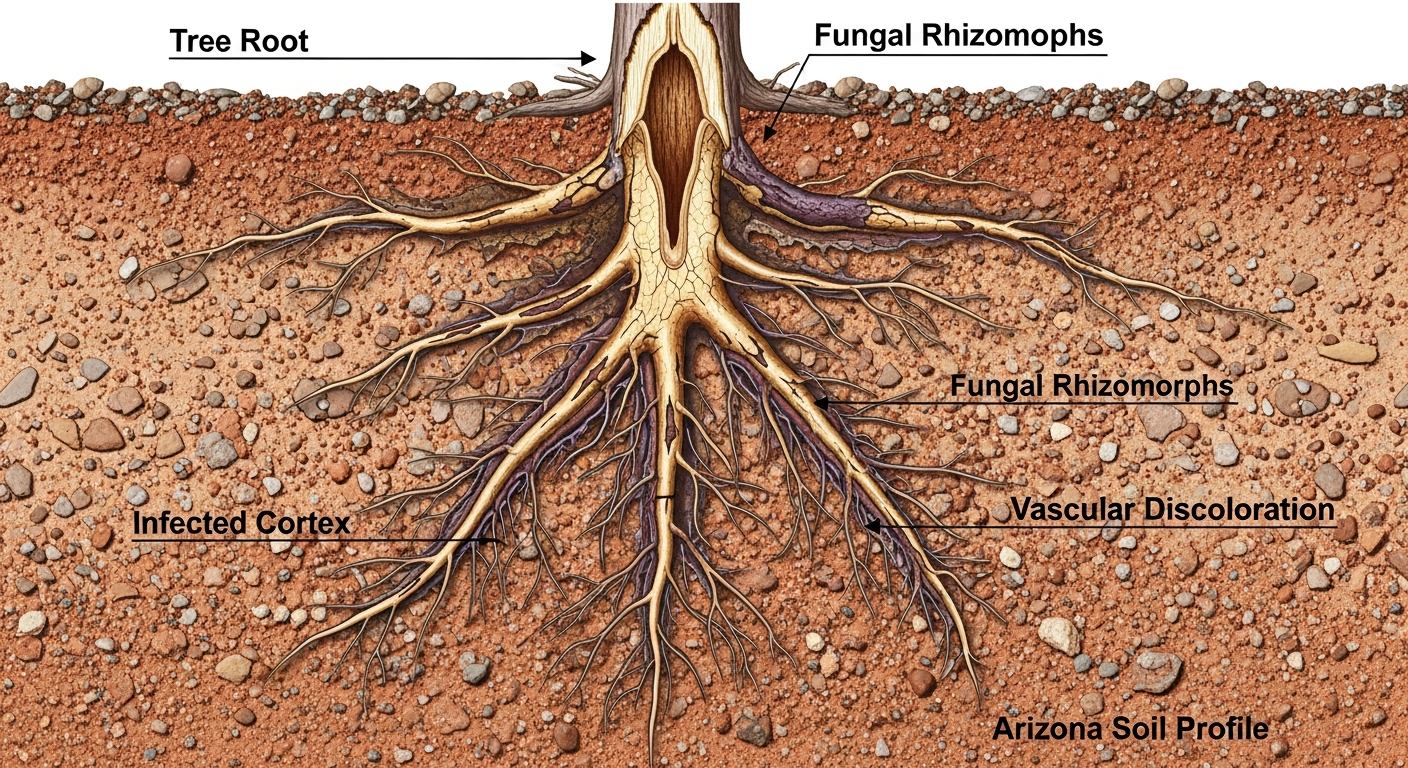
Texas root rot is the most devastating plant disease in Arizona, killing mature trees within days and persisting in soil for decades. Understanding this disease is essential for every Peoria homeowner.
What is Texas Root Rot?
Also called cotton root rot or Phymatotrichopsis root rot, this fungal disease is caused by Phymatotrichopsis omnivora. The fungus thrives in our alkaline desert soils (pH 7.0-8.5) and warm temperatures.
The Deadly Timeline: Texas root rot typically strikes during the hottest months (June-September). A healthy tree can wilt, brown, and die within 24-72 hours once symptoms appear.
Recognizing the Symptoms
Initial Warning Signs: The first symptom is often sudden wilting and bronzing of leaves during summer. Unlike drought stress that develops gradually, root rot symptoms appear rapidly, sometimes overnight.
Affected leaves typically remain attached to branches even after death, creating a characteristic "frozen in time" appearance.
Advanced Symptoms:
- Tan to yellow fungal mats on the soil surface or on roots near the crown
- White fungal strands (mycelium) visible on roots when excavated
- Bark that easily peels away from dead roots
- A musty odor near the tree base
- Complete tree death, often within a week of first symptoms
Most Susceptible Trees in Peoria
Highly Susceptible (Avoid if possible):
- Mulberry - Extremely vulnerable, often the first to die in infected areas
- Arizona ash and Raywood ash
- Cottonwood and poplar species
- African sumac
- Fruit trees: Apricot, apple, peach, and plum
Resistant Species (Safer Choices):
- Palms - All palm species are immune
- Texas ebony, Desert willow
- Palo verde (all varieties)
- Mesquite (native and hybrid varieties)
Can Texas Root Rot Be Cured?
Unfortunately, there is no cure for Texas root rot once a tree is infected. By the time symptoms appear, the fungus has already destroyed most of the root system.
In most cases, infected trees should be removed promptly to prevent them from becoming safety hazards. Our team provides professional tree removal services for diseased and hazardous trees.
Prevention Strategies That Work
1. Choose Resistant Species: When planting new trees in Peoria, select species known to resist Texas root rot. Native desert trees like mesquite and palo verde are your safest bet.
2. Improve Soil Drainage: The fungus thrives in compacted, poorly drained soils. Amend planting holes with sulfur and organic matter.
3. Avoid Overwatering: Excess moisture creates ideal conditions for root rot. Water deeply but infrequently.
4. Maintain Tree Health: Healthy, vigorous trees are more resistant. Proper pruning, adequate nutrition, and stress reduction help trees fight infection.
Professional Tree Assessment
If you suspect Texas root rot or have lost trees to this disease, professional assessment can help you make informed decisions about tree replacement and soil treatment.
Our certified arborists can:
- Confirm or rule out Texas root rot through symptom analysis
- Assess whether trees can be saved or should be removed
- Recommend appropriate replacement species for your landscape
- Develop a comprehensive disease management plan
Don't let Texas root rot destroy your landscape investment. Contact Peoria Tree Care Pros today for expert tree disease diagnosis and management. Call (623) 555-0100 for a free consultation.